One thing first. Research hasn’t found a single posture that’s right for everyone, or one that reliably protects against pain, and physiotherapy researchers have argued the old “sit up straight” advice deserves a rethink. So this is less about holding a position and more about variety, and about noticing.
1 Bring screens up to your eyes
- Try
- Put your laptop on a stand or a stack of books and use a separate keyboard. Hold your phone a little higher when you read for long.
- Why people try it
- Your head goes where your eyes need to be. Moving the screen changes that all day without you having to remember anything.
- Limits
- Hard to arrange on a sofa or a train. Our desk guide covers screen height and distance in detail.
2 Move more than you hold still
- Try
- Stand for calls. Take reading to a different chair. Walk while you think something through.
- Why people try it
- Health guidance tends to stress keeping active and not holding your neck in one position for long, rather than finding a perfect pose.
- Limits
- Meetings and deadlines don’t always allow it. Small, regular changes still count.
3 Notice how long your head stays down
- Try
- A few times today, when you look up from your phone, ask yourself how long you’d been looking down.
- Why people try it
- When you’re absorbed, your body drops out of view. We wrote about why. Noticing comes before changing anything.
- Limits
- Self-checks are easy to forget when you’re focused, which is exactly when they would help.
4 Consider strength and mobility work
- Try
- Exercise you enjoy and will keep doing. Some physical therapists suggest upper-back mobility and core work.
- Why people try it
- It’s often recommended alongside, or instead of, a corrector, so your own muscles do the work rather than a strap.
- Limits
- What suits you depends on you. If you have pain or an injury, get advice before starting a programme.
5 Use a gentle reminder, if you want one
- Try
- A break timer, a note on your monitor, or a reminder that notices for you, such as POIS with the AirPods you already wear.
- Why people try it
- A cue from outside reaches you when your own attention can’t. That’s the gap every habit on this list leaves: you forget while you’re absorbed.
- Limits
- Reminders that come too often get ignored. And each one only knows what it can sense: a timer knows nothing about your head.
One afternoon, one habit
Pick where you’ll be. Each is a single small change, not a routine.
At a desk
2 p.m., a long document
Before you start, raise the screen so its top is near eye level. Choose a natural break, such as sending a file, and stand up when it happens. When you notice your head has crept toward the screen, look at something far away for a moment, then carry on. Nothing to hold.
On your phone
The commute, or the sofa
Hold the phone a little higher, or rest your elbows on something. Save long reads for a bigger screen when you can. Each time you lock the phone, look up for a second before moving on.
Walking
Between places
Leave the phone in your pocket for part of the walk and look where you’re going. Read messages standing still rather than mid-stride. Near traffic, your eyes belong on the street: no habit or app replaces that.
A seven-day noticing experiment
Optional. Nothing to sign up for, and nothing on this page is saved or sent. It’s about observing, not about getting your posture “right”.
If anything feels uncomfortable, stop. This isn’t a treatment programme.
When not to manage it yourself
Habits and reminders are for everyday comfort and awareness. They aren’t the right response to:
- Neck or back pain that hasn’t improved after a few weeks, or that worries you.
- Pins and needles, numbness or weakness in your arms or legs.
- Pain after an accident or fall, or with a fever or feeling generally unwell.
- A condition a doctor or physical therapist has already given you a support or a plan for.
Back pain with numbness or weakness in both legs, loss of feeling around the genitals or bottom, or bladder or bowel changes needs emergency care: the NHS advises calling 999 or going to A&E. Elsewhere, use your local emergency number.
The habit that remembers for you
Approaches 1 to 4 all depend on you noticing. POIS covers the moments you don’t.
Nothing strapped on
It uses the AirPods already in your ears. No brace, no device, no adhesive.
Only when it matters
Quick glances pass in silence. One quiet sound plays only when your head stays down.
Everywhere you go
Designed for sitting, standing and walking, at a desk or away from one.
No pressure
No posture score, no streaks. Just a nudge, and then it leaves you alone.
Already wear compatible AirPods?
POIS is one way to do approach 5 without wearing anything new. It uses the motion sensors in compatible AirPods to notice when your head stays tilted down compared with your natural position, and plays one quiet sound. It doesn’t sense your back or shoulders, it needs a session running on your iPhone, and the AirPods have to be in your ears.
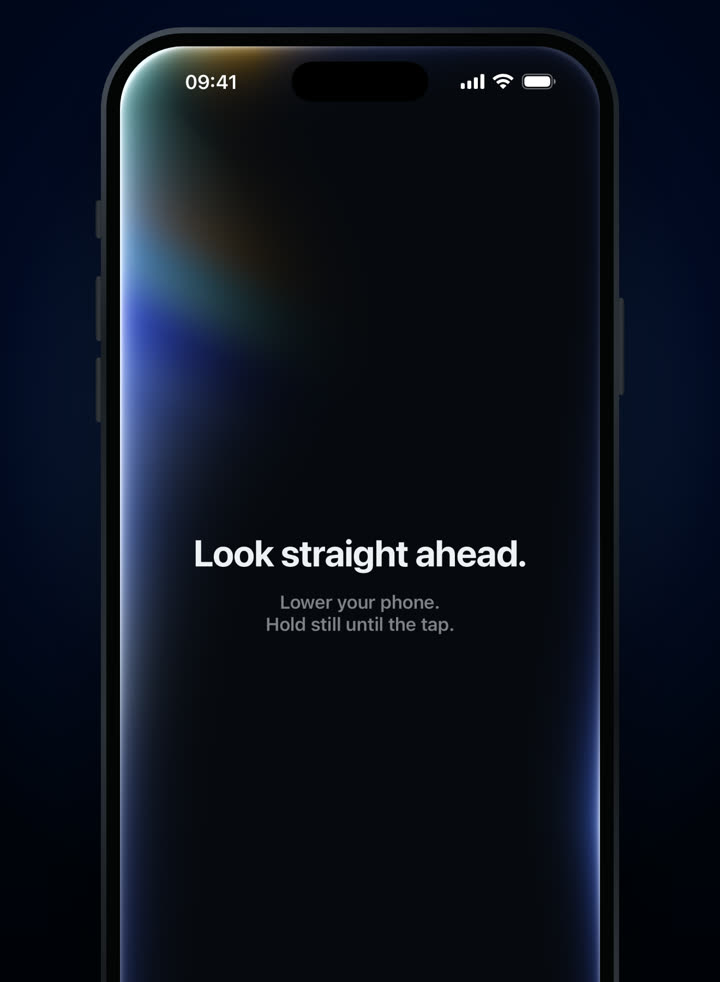
Set your natural position: look straight ahead. 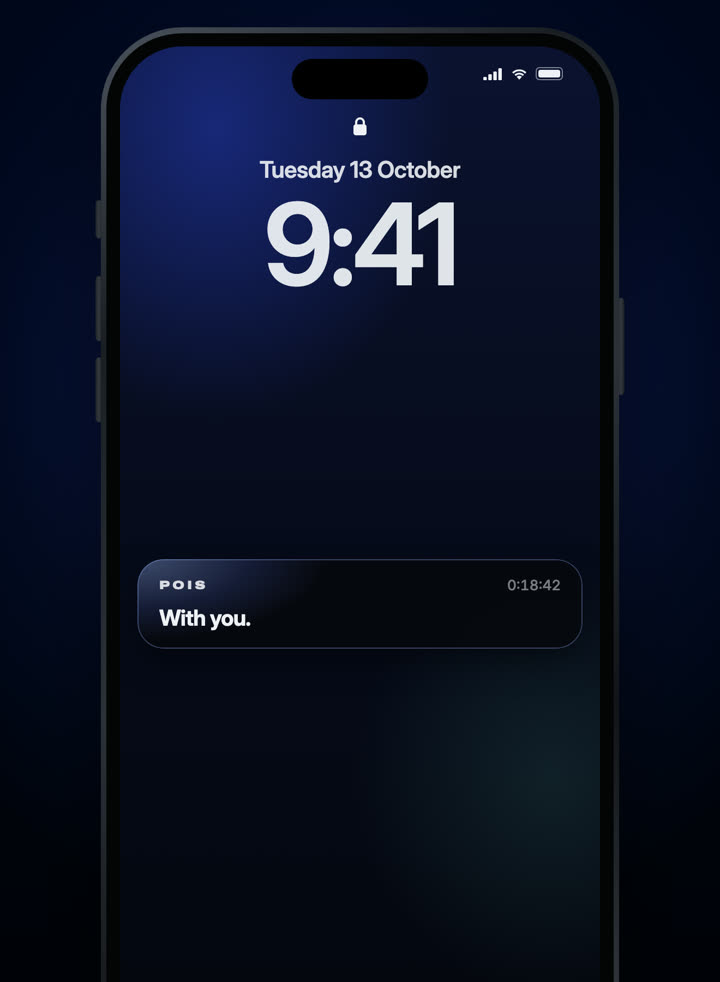
Then lock your phone and get on with the afternoon.
3-day free trial · Monthly or yearly, in your local price on the App Store.
Screens from the shipping app.
General information, not medical advice. POIS isn’t a medical device and doesn’t diagnose, treat or prevent any condition.